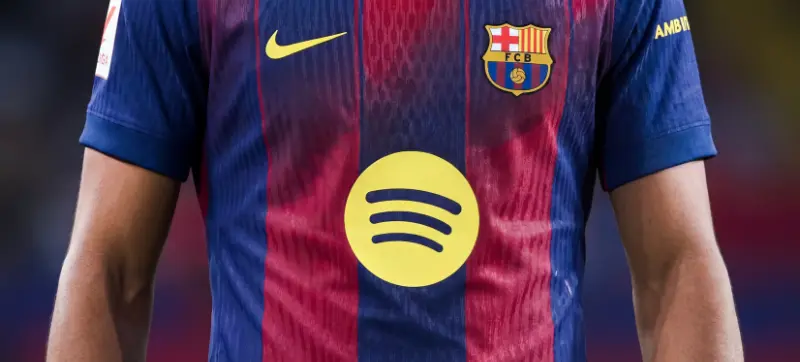
From a local football club to the Super Bowl halftime show, every sports sponsorship agreement follows the same core logic. Every shirt badge, stadium name, and pitchside banner exists because two parties – a rights holder and a sponsor – signed a contract that carefully allocates rights, money, and risk between them. Whether you are advising a brand entering its first sports partnership, or a club negotiating a renewal, the same principles apply. Let’s walk through them one by one.
Defining the Parties and the Rights
The most basic question in any sponsorship deal sounds obvious: who is giving what to whom? But getting this wrong is surprisingly common, and it creates problems from day one.
The agreement must clearly identify the rights holder – the club, federation, athlete, or event organiser that owns the commercial rights being licensed – and the sponsor – the company paying for those rights. If the rights holder is a federation that delegates commercial rights to a separate marketing entity, that structure needs to be spelled out. If the sponsor is a holding company but the branded entity is a subsidiary, same thing.
Then comes the core of the deal: what rights are actually being licensed? This is not a formality. The grant of rights clause should list, in precise terms, every right the sponsor is receiving: use of the rights holder’s logo, association with the event title, access to athletes for appearances, presence in digital content, naming rights to a stadium or a competition – all of it. Anything not listed here does not belong to the sponsor.
The financial structure
The financial structure of a sponsorship agreement is rarely just a flat annual fee. Modern deals are often layered: a guaranteed base fee, a variable component tied to performance or exposure metrics, plus bonuses for specific achievements such as winning a championship or qualifying for an international competition.
The agreement should specify the currency, the payment schedule, what triggers each instalment, and what happens if payments are late. In international deals spanning multiple jurisdictions, currency risk and bank transfer mechanics are worth addressing explicitly.
Consideration can also take non-cash forms. A sportswear brand supplying kit, a technology company providing equipment, or a food and beverage sponsor offering product supply – these in-kind contributions need to be valued and documented just as carefully as cash.
Exclusivity and category protection
One of the most commercially sensitive points in any sponsorship deal is exclusivity. A beer brand will not pay to sponsor a football tournament if a competitor’s logo appears on the same pitch. An automotive company will not invest in a club jersey if another car manufacturer simultaneously holds the naming rights to the club’s home arena.
Exclusivity clauses define the category – typically described by product type or industry sector – within which the sponsor is protected from competition. Drafting these clauses precisely is critical. Categories that are too broad give the sponsor excessive control. Categories that are too narrow leave gaps a competitor can exploit.
Related to this is the concept of ambush marketing protection. In international sports – particularly around major events like the Olympics, the FIFA World Cup, or the UEFA Champions League – non-sponsors regularly attempt to associate themselves with the event without paying for rights. Rights holders use a combination of contractual provisions, national legislation, and regulatory rules to combat this. Sponsors should understand what protection they are actually receiving and what enforcement mechanisms exist.
IP, Image Rights, and Brand Usage
A sponsorship deal will usually include an intellectual property licence as one of its core components. The sponsor is paying, among other things, for the right to use the rights holder’s trademarks, logos, and brand identity in its own marketing and communications. This licence must be carefully scoped.
The agreement should specify: which IP is licensed (logos, crests, official marks, photographs), what the sponsor is allowed to do with it (advertising campaigns, social media, product packaging), what approvals are required before any use, and what happens to any marketing materials, campaign assets or brand uses that have already been launched, published or otherwise made public before the deal comes to an end.
When individual athletes are involved, image rights add another layer. In most jurisdictions, athletes have a separate legal claim over the commercial use of their name, likeness, voice, and personal brand – distinct from any rights the club or federation holds. A deal that involves individual athlete appearances, endorsement campaigns, or personal social media posts must address image rights directly, either by contracting with the athlete separately or ensuring the club or federation has the authority to sublicense those rights.
Obligations and performance
One of the most overlooked areas in sponsorship agreements is the articulation of mutual obligations. The sponsor pays – but what must the rights holder actually deliver in return? And what must the sponsor do to activate the partnership effectively?
From the rights holder’s side, obligations typically include: delivering agreed signage and media exposure, facilitating athlete appearances, providing hospitality, giving timely approvals on creative materials, and maintaining the commercial standards and reputation that made the partnership attractive in the first place.
From the sponsor’s side, there are often minimum spend commitments on activation – meaning the brand must invest a certain amount in actually using and promoting the sponsorship, rather than simply banking the association passively. This protects the rights holder’s commercial ecosystem.
Increasingly, sponsorship agreements also include measurable KPIs: broadcast minutes, social media reach, audience demographics, or brand awareness survey results. These metrics are used to assess value and, in some deals, to trigger fee adjustments.
Termination, morality clauses, and force majeure
Even well-structured partnerships break down. The agreement must anticipate the circumstances under which either party can walk away – and what the consequences are when they do.
Standard termination provisions cover material breach, insolvency, and expiry of the agreed term. But sports deals carry unique risks that require more specific clauses.
Morality clauses – sometimes called reputation clauses or conduct clauses – give a party the right to terminate if the other party engages in behaviour that could harm its brand or reputation. These clauses became standard after a series of high-profile athlete scandals, and today they appear in virtually every significant endorsement deal. Drafting them well requires balancing legitimate brand protection concerns against the need for legal certainty about what actually triggers the clause.
Force majeure provisions – covering events beyond either party’s control – became central to sports law debates during the COVID- 19 pandemic, when entire seasons were cancelled or played without spectators. Sponsors sought fee reductions, termination rights, or make-good rights; rights holders contested them. Today, well-advised parties negotiate the scope of force majeure explicitly, including what obligations are suspended, for how long, whether substitute benefits or make-good opportunities must be provided, and what happens to fees during the interruption.
Key termination triggers to address
Material breach by either party
Insolvency or relevant change of control
Athlete doping, criminal conduct, misconduct or other reputational events
Relegation or failure to qualify (in club deals)
Cancellation or postponement of the event (force majeure)
Regulatory prohibition or restriction on the sponsor’s product category
Governing law, jurisdiction, and dispute resolution
Sports sponsorship is a global business. A German automotive brand sponsoring a South American football federation, with broadcast exposure across Asia – which country’s law governs their contract if something goes wrong?
The governing law clause determines which legal system interprets the agreement. The jurisdiction or dispute resolution clause determines where and how disputes are resolved. These two choices interact and should be made deliberately, not by default.
In international sports deals, arbitration is increasingly preferred over national courts. Arbitration offers confidentiality – important for commercially sensitive disputes – and neutrality, which matters when the parties are based in different countries with different legal traditions. Although the Court of Arbitration for Sport (CAS) may also hear sponsorship disputes where the parties have agreed to CAS arbitration, purely commercial sponsorship disputes are more commonly submitted to commercial arbitration under ICC, LCIA, CIAM or other institutional rules.
Where one party is based in the European Union, competition law considerations also apply. Exclusivity arrangements, collective selling of rights by federations, and certain bundling practices may require legal review to ensure compliance with EU competition rules.
Regulatory compliance and the evolving landscape
Sponsorship agreements do not exist in a vacuum. They operate within a regulatory environment that varies significantly across jurisdictions and continues to change.
Certain product categories face specific restrictions. Alcohol advertising is prohibited or limited in many countries, including France under the Loi Évin. Tobacco sponsorship of sport is banned across the EU and in many other markets. Gambling sponsorship is under increasing pressure in Spain, the UK, and elsewhere, with several leagues having already restricted betting brands from front- of-shirt positions.
Data protection is another growing area. Sponsorship activation increasingly involves the collection and use of fan data – for personalised advertising, loyalty programmes, or digital engagement campaigns. Any such use must comply with applicable privacy law, including the GDPR in Europe.
Finally, sustainability and ESG commitments are beginning to appear in sponsorship contracts. Brands are increasingly making their investment conditional on the rights holder meeting certain environmental or social standards — and rights holders are similarly becoming selective about the companies they associate with.
A well-drafted sponsorship agreement does far more than list rights and fees. It creates the framework for a genuine commercial partnership – one where both parties know exactly what they have committed to, what they can expect in return, and how disagreements will be handled if they arise. Whether you are entering your first deal or renegotiating a long- standing partnership, taking the time to understand these elements is the first step toward getting the agreement right.
On September 3, together with INDESCAT (the Catalan Sports Industry Cluster) and in collaboration with the Barcelona Sports Hub, we are hosting an event dedicated to ethics, values, and positive impact in sports.
Becoming a sports lawyer requires understanding that this sector has evolved from a purely associative management domain into a global, multidisciplinary industry moving billions of euros.