Dispute Resolution in Football: What the FIFA Football Tribunal Report 2025/26 Means for Lawyers
Dispute Resolution In Football
The FIFA Football Tribunal closed the 2025/26 season with 22,417 cases, applications and enquiries, the highest figure in its history. Claims before the FIFA Dispute Resolution Chamber hit a new record, the average dispute now takes 111.5 days to resolve, and a new edition of the FIFA Regulations on the Status and Transfer of Players (RSTP) takes effect on January 1, 2027. Here is what the numbers reveal about dispute resolution in football, and why specializing in football (soccer) law has become an urgent career decision for lawyers.
Key takeaways from the FIFA Football Tribunal Report 2025/26
The FIFA Football Tribunal is FIFA’s decision-making body for international football disputes and regulatory applications. It has three chambers: the Dispute Resolution Chamber (DRC), the Players’ Status Chamber (PSC) and the Agents Chamber. Its fifth annual report, published in September 2026, covers July 1, 2025 to June 30, 2026. The headline findings:
Record activity: 22,417 cases, applications and enquiries.
Record contract disputes: 3,475 claims across the DRC and the PSC, up 74% from 2021/22.
More complex proceedings: average resolution time rose from 88.5 to 111.5 days.
A regulatory framework in flux: the first full year of the Interim Regulatory Framework (IRF), with a new RSTP from January 1, 2027.
Fast-growing niches: FIFA mediation doubled, and national-team eligibility requests rose 37% ahead of the 2026 FIFA World Cup.
No time for the full 49-page report? We’ve condensed the key takeaways into a one-page infographic: the 12 figures that matter, the 5 fastest-growing specializations and the timeline to the new RSTP. You’ll find the free download at the end of this article.
The FIFA Dispute Resolution Chamber: a new record after four straight years of growth
The Dispute Resolution Chamber received 2,346 employment-related claims between players and clubs and resolved 2,171, up 20.4% on the previous year. More than half were decided by the chamber itself. Only 20.6% were closed through a FIFA administration proposal accepted by the parties. In other words, the fast track is the exception. Most cases go to a decision and require full legal work: submissions, evidence, counterclaims and strategy.
The Players’ Status Chamber, which hears club-to-club disputes and cases involving coaches, also reached a record 1,129 claims. That matters for firms advising clubs and coaching staff, a segment that often gets less attention than player representation.
More complexity means more specialization
Average resolution time climbed to 111.5 days (114.5 at the DRC and 105.2 at the PSC). FIFA attributes this to the record caseload, more complex claims, counterclaims, multi-party proceedings and the application of the IRF. It also explicitly cites the specialization and high quality of the legal representatives involved.
For any lawyer, that is the most telling line in the report: the technical bar has risen. Lawyers who arrive without specialization are up against firms that already have it.
How dispute resolution in football works at the international level
Dispute resolution in football follows a layered system. For disputes with an international dimension, there are five main routes:
FIFA Football Tribunal: the Dispute Resolution Chamber hears player-club employment disputes and training reward claims. The Players’ Status Chamber hears club-to-club disputes, coach disputes and regulatory applications.
FIFA administration proposals: in straightforward cases with settled case law, FIFA can propose a solution without a formal decision. In 2025/26, 21.6% of PSC claims and 20.6% of DRC claims closed this way.
FIFA mediation: voluntary, confidential and free of charge, with 51 cases in 2025/26.
National dispute resolution chambers (NDRCs): parties can agree in writing to have their dispute decided by a FIFA-recognized national chamber. There are 11 so far.
Why football law specialization is urgent: four drivers
1. A new FIFA RSTP takes effect on January 1, 2027
During the period covered, three editions of the RSTP were in force (October 2024, January 2025 and July 2025), alongside two editions of the Football Tribunal’s Procedural Rules. The report confirms that FIFA is preparing a new RSTP that takes effect on January 1, 2027. Contracts signed and disputes arising after that date will run under new rules, and the first months will set the interpretive tone.
2. The Interim Regulatory Framework: case law in real time
After the Court of Justice of the EU ruled in the Diarra case, FIFA approved the Interim Regulatory Framework (IRF) on December 22, 2024, amending key rules on contractual stability. 2025/26 was its first full year, and the Football Tribunal has already applied it in several significant employment disputes. FIFA itself says this case law will continue to develop “in real time.”
The IRF also changed how the International Transfer Certificate (ITC) works. A former association can no longer reject an ITC request and must issue it within 72 hours, so a contract dispute can no longer block a player’s registration. The fight moves entirely to financial claims and contractual liability, where the quality of legal advice makes the difference. For background, see From the Bosman Case to the Diarra Case.
3. The 2026 World Cup drove a surge in national-team eligibility work
With 48 teams instead of 32, more associations had a realistic path to the tournament co-hosted by the United States, Canada and Mexico, and more reason to widen their pool of eligible players. Eligibility requests rose 35% (162, from 63 associations) and change-of-association requests rose 38.8% (186, from 76 associations). Morocco filed 13 change-of-association requests, Suriname 11 and Albania 7. It is a highly technical field, governed by the Regulations Governing the Application of the FIFA Statutes (RGAS), that combines nationality law with sports regulation.
4. New dispute resolution routes: mediation and national chambers
FIFA mediation cases doubled from 25 to 51, and 28 ended in settlement. FIFA now calls mediation “an established and effective means of dispute resolution” and plans to expand it. The Football Tribunal has also recognized 11 national dispute resolution chambers (NDRCs), including those in England, France, Belgium and Mexico, out of 24 applications since the framework began. The United States is not yet on that list.
And one front on hold: football agents
The FIFA Football Agent Regulations (FFAR) remain suspended pending a final decision by the Court of Justice of the EU. As a result, the Agents Chamber currently has no jurisdiction and does not appear in the statistics. Once that freeze lifts, a new stream of disputes will open, and lawyers and agents who already know the rules will be best placed.
Four markets where the report matters most
The Football Tribunal’s caseload is global: 109 member associations filed minor applications alone. For English-speaking lawyers, four markets stand out, each for a different reason.
Market
Main reason
What the report shows
United States
The Tribunal’s administration is based there
FIFA’s Disputes and Regulatory Applications Department operates from its Miami office. U.S. members sit on the chambers (Clifford J. Hendel, Jon Newman, Christina LaBrie), and U.S. Soccer’s limited minor exemption was renewed. There is no FIFA-recognized U.S. national chamber yet.
United Kingdom
Two forums to master: national and FIFA
English football’s dispute bodies (the Player Related Dispute Commission, the Managers’ Arbitration Tribunal and FA Rule K arbitration) are one of only 11 FIFA-recognized NDRCs. England and Wales hold active limited minor exemptions, and Scotland’s was renewed in 2025/26.
Middle East
National-team eligibility and youth recruitment
Qatar ranked third worldwide for minor applications (858, 98.7% accepted). The UAE (10) and Jordan (10) were among the top five for eligibility requests, and the AFC has the highest average of eligibility and change-of-association requests of any confederation. No Gulf association has a FIFA-recognized NDRC yet.
Australia
Dual-nationality player pools
Football Australia was among the top five for eligibility requests (8) and filed 15 eligibility and change-of-association requests since 2024 on its way to the 2026 World Cup. Australians sit on the bench: Angela Collins (DRC) and Brianna Quinn (Agents Chamber chair).
The common thread: wherever a lawyer practices, the disputes that matter are decided under the same FIFA rules, and those rules change on January 1, 2027.
Which football law specialization fits your profile
Not every lawyer starts from the same place. The report shows where demand is concentrated and what each profile should prioritize.
Your profile
What you already bring
What you need to compete
Where to start
Employment, commercial or litigation lawyer new to sports
Contract and procedural skills
FIFA regulations (RSTP, just cause, Article 17), how the DRC and PSC work, and how their decisions are enforced
A structured foundation in football law
Experienced sports lawyer looking for a niche
Industry knowledge and network
Depth in a high-demand area: international transfers, minors, national-team eligibility or mediation
Focused executive training
Lawyer advising agents or clubs
Clients in the market
Operational command of the transfer: ITC, registration periods, solidarity, training compensation, sell-on and buy-out clauses
The full transfer cycle, step by step
According to the data, five areas show the strongest pull:
Litigation before the DRC and the PSC: 3,475 contract disputes a year and rising.
Transfers and compliance: 2,119 transfers triggered a validation exception in the Transfer Matching System (TMS), and FIFA was asked to intervene in 949. In more than a third of those requests, the transfer window had closed while the minor’s application was still pending.
Registration of minors: 17,293 applications in a single season.
Training rewards and the FIFA Clearing House: 25,499 Electronic Player Passports (EPPs) generated in one year, under a procedure that is still new to many practitioners.
Eligibility, change of association and mediation: small, highly technical and fast-growing niches.
Training options for football law professionals
Whatever your profile, the next step is the same: turn the trends in the report into practical expertise before the new RSTP takes effect. Sports Law Hub offers two complementary routes, both taught by active practitioners. Choose the one that matches where you are today:
Need a solid foundation, or a full update on FIFA rules? The Football Law Course covers the core framework, from just cause to the enforcement of Football Tribunal decisions, in five live sessions.
FOOTBALL LAW COURSE: ESSENTIAL ASPECTS FOR LAWYERS AND AGENTS
It covers how national employment law interacts with FIFA regulations, just cause, enforcement of Football Tribunal decisions, solidarity, training compensation, minors and multi-club ownership. It is taught by practitioners from clubs, agencies and international law firms.
Already in practice and want to master transfers? The 90-minute masterclass with Josep F. Vandellòs goes deep on the full transfer cycle, from the ITC to sell-on and buy-out clauses.
MASTERCLASS / Anatomy of a Football Transfer: From FIFA Regulations to Contract Execution, with Josep F. Vandellòs
A 90-minute session with a lawyer who has 20+ years of experience before FIFA bodies and the CAS. It walks through ITC processing, registration periods, solidarity and training compensation, sell-on and buy-out clauses, and the latest RSTP amendments.
FAQ. Dispute resolution in football and the FIFA Football Tribunal
It is the set of bodies and procedures that settle conflicts between players, clubs, coaches, agents and associations. At the international level, it centers on the FIFA Football Tribunal (the DRC and the PSC), FIFA mediation and FIFA-recognized national chambers, with appeals to the Court of Arbitration for Sport.
The Dispute Resolution Chamber (DRC) is one of the three chambers of the FIFA Football Tribunal. It decides international employment disputes between players and clubs, plus disputes over training compensation and the solidarity mechanism. Its panels include equal numbers of player and club representatives, with an independent chair.
The DRC handles player-club employment disputes and training reward claims. The Players’ Status Chamber (PSC) handles disputes between clubs from different associations and disputes involving coaches. It also rules on minor registrations, national-team eligibility and changes of association.
Between July 1, 2025 and June 30, 2026, it received 22,417 cases, applications and enquiries, an all-time record. The DRC resolved 2,171 employment disputes and the PSC 1,085 claims, and 17,270 applications to register minors were resolved.
On average, 111.5 days from a properly filed claim to resolution: 114.5 days at the DRC and 105.2 days at the PSC. The 2024/25 average was 88.5 days.
The new FIFA Regulations on the Status and Transfer of Players take effect on January 1, 2027, according to the Football Tribunal Report 2025/26.
No. Many lawyers move into football law from employment, commercial or litigation practice and build on those skills. The essential step is mastering FIFA regulations and how its chambers operate, which takes specialized, practice-oriented training.
Conclusion: the best time to specialize is before 2027
The 2025/26 report shows a market with more cases than ever, more demanding proceedings and a rulebook that changes on January 1, 2027. For lawyers looking to enter the field, this is the window. For those already in it, this is the moment to go deeper into a specific area before competitors do.
At Sports Law Hub, we train lawyers and agents with practitioners who litigate and negotiate before these same bodies every day. Explore our sports law courses.
Keep the report’s key takeaways on a single page. Download the infographic with the 12 figures and the 5 fastest-growing specializations, and get our 2027 RSTP updates.
For a practicing lawyer, entering the sports industry under the assumption that it simply means applying civil or labor law is a fundamental mistake. If we ask ourselves what sports law actually is, the answer goes far beyond managing sponsorship contracts or drafting bylaws.
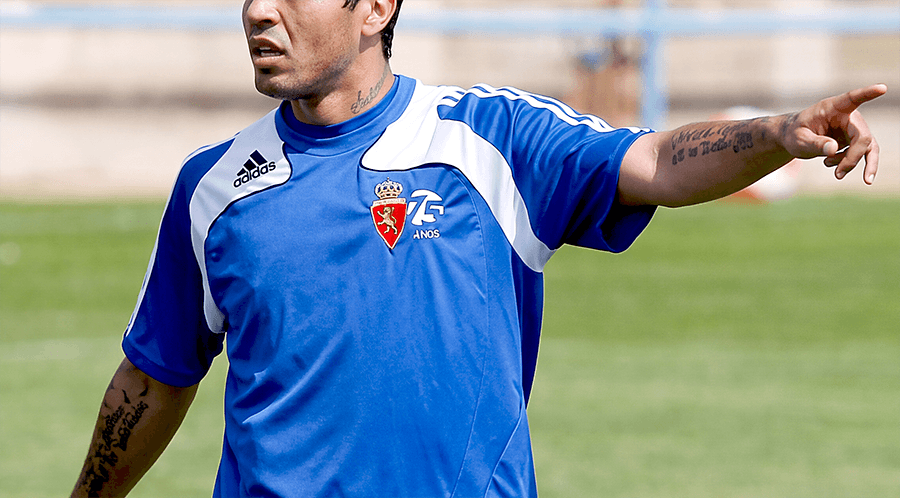
The Matuzalem case (CAS 2008/A/1519 & 1520) represents a historic turning point in international sports law. It redefined how financial compensation is calculated for unilateral contract termination without just cause under Article 17 of the FIFA Regulations on the Status and Transfer of Players (RSTP).