Shooting commercials as a professional athlete: the legal framework you cannot ignore
World Cup
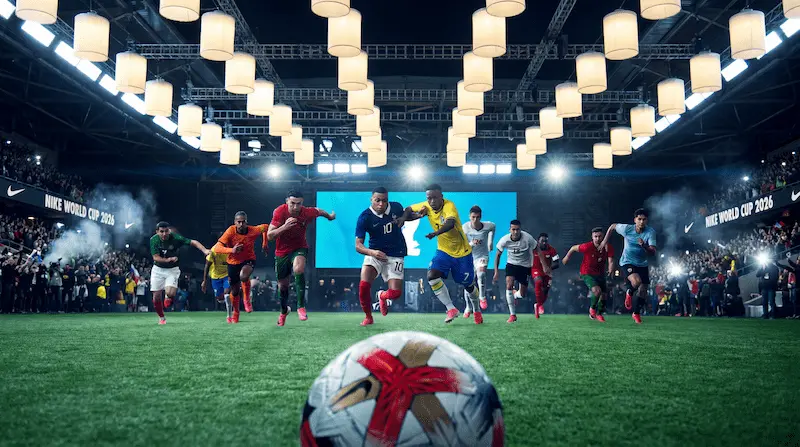
The FIFA World Cup 2026, which kicked off on 11 June across the United States, Mexico, and Canada, triggered an unprecedented race between the world’s two biggest sportswear giants. Adidas, as FIFA’s official tournament partner and supplier, deployed its traditional high-production narrative playbook – launching emotional storytelling films featuring its contracted stars. Nike, excluded from official FIFA sponsorship, responded with a decentralised, culture-driven 42-person cast campaign, described internally as building a “universe” of football that unfolded over weeks, not a single broadcast moment. Both campaigns shared something beyond their high budgets: every athlete participating had entered into a set of legal relationships that governed not just their fee, but their likeness, and often significant portions of their contractual freedom.
This article is written for athletes, agents, and sports professionals navigating commercial shoot agreements. It covers the seven legal pillars every professional athlete must understand before signing a commercial deal – and the clauses that most frequently cause disputes.
Image rights: your most valuable non-sporting asset
Image rights refer to the legal protection over an athlete’s name, likeness, voice, signature, photograph, and any other identifiable personal attribute. Usually, they are protected through a combination of personality rights under civil law, intellectual property law, and data protection regulation. When Cristiano Ronaldo appears in a Nike campaign, his likeness – the silhouette, the face, the number 7 association – is not freely available to the brand. Nike holds a contractual license to exploit specific elements of his image, in specific territories, through specific media channels, for a defined period. Every one of those parameters is negotiated, priced, and legally binding.
Athletes must ensure that any commercial agreement clearly specifies:
(a) which elements of image are licensed;
(b) whether the license is exclusive or non-exclusive;
(c) for which territories;
(d) through which media and distribution channels; and
(e) for what duration.
Who owns the commercial?
As a general rule, the copyright in an audiovisual work belongs to the producer. In practice, this means that the commercial itself – the footage, the edit, and the final film – is owned by the brand that commissioned it, not by the athlete who appears in it. Many athletes only realize the importance of this distinction when a dispute arises or they want to reuse the content later.
For example, an athlete who shoots a campaign for a brand may later find that brand can re-use that footage in ways not originally contemplated – including in promotional contexts the athlete now finds reputationally damaging, or in markets where the athlete has since signed with a competing brand. Without specific contractual protections, the athlete has limited legal standing to object.
What athletes should negotiate:
(a) explicit restrictions on secondary use of footage;
(b) approval rights over final edits before publication;
(c) a right of withdrawal (with financial consequences for the brand) if the athlete’s circumstances change materially; and
(d) clarity on whether behind-the-scenes content, rushes, and unused footage are also owned by the brand or remain confidential.
Exclusivity and sponsorship conflict clauses
Most professional endorsement agreementsinclude category exclusivity provisions, prohibiting the athlete from representing competing brands in the same product or sector. A footballer signed to Nike cannot endorse Adidas footwear – but the legal question is almost never that simple. The real battleground is the definition of the “exclusivity category” and whether ambush marketing activity by the athlete’s club, national team, or third-party event sponsors creates a conflict.
Consider the structural tension evident in the 2026 World Cup context: Adidas is the FIFA official partner and outfits multiple national teams. A player on a Nike personal contract who represents an Adidas-kitted national team must perform within carefully negotiated rules about which kit they wear, which brand logos appear in which contexts, and whether they can speak publicly about kit preferences. These arrangements are among the most technically complex in sports commercial law.
Moral rights and reputational control
Unlike economic rights, which can be assigned and licensed, moral rights are untransferable. They include the right to be identified as the author of a creative work and the right to object to derogatory treatment of that work. For athletes in commercial contexts, the relevant analogue is the right to protect their reputation and public image from uses they did not consent to.
In practice, this means athletes should negotiate so-called “morality clauses” – and not only accept them from the brand’s side. A mutual morality clause allows the athlete to terminate the agreement if the brand is involved in conduct seriously damaging to the athlete’s values or public reputation. In an era of rapid reputational crises, this protection is commercially and legally essential.
Tax structure of image rights remuneration
Many athletes don’t get paid for their image rights directly. Instead, they set up a separate corporate entity – often called an “image rights company” – to hold these rights. When a brand like Nike or Adidas wants to do a deal, they pay the company rather than the athlete.
This is a completely legal strategy that can drastically lower an athlete’s tax bill. Because corporate tax rates are usually much lower than personal income tax rates, keeping the money in a company saves a massive amount of cash in the short term.
The shoot itself: labour law, health and safety, and the performer’s rights
Athletes are entitled to a safe working environment, reasonable working hours, and adequate preparation time. Any stunt, physical activity, or risk-generating performance must be covered by a specific risk assessment and consented to in writing. Athletes should ensure their agreements specify maximum shooting hours per day, rest requirements between sessions, approval rights over any physically demanding content, and clear provisions about injury liability during the shoot.
Furthermore, a comprehensive contract needs to cover on-set welfare and the athlete’s long-term digital protection:
On-Site Medical Support: For any physically demanding shoot, the production company must provide qualified medical staff (like a physiotherapist or paramedic) on set, alongside appropriate emergency equipment.
Welfare & Catering: Contracts should guarantee basic comforts, including adequate nutrition tailored to the athlete’s dietary requirements, climate-controlled dressing rooms, and scheduled hydration breaks, especially during outdoor or high-intensity shoots.
Digital & AI Safety: With the rise of digital cloning, athletes must ensure the contract explicitly states how any 3D body scans, motion-capture data, or voice recordings taken during the shoot will be used. The production company should not be allowed to reuse or alter the athlete’s digital likeness for future campaigns or AI generation without separate written consent and additional payment.
Why this matters: an athlete’s body is their livelihood. A single injury on a commercial set due to exhaustion or unsafe conditions can jeopardize their entire sporting career. Securing these protections beforehand ensures the brand treats the athlete like a professional performer, not just a marketing prop.
Ambush marketing and third-party exploitation
Nike’s “Rip the Script” campaign for the 2026 World Cup is itself a masterclass in sophisticated ambush marketing – the brand is not an official FIFA partner yet has constructed a campaign so culturally proximate to the tournament that consumer association is inevitable. This is entirely legal. However, for athletes contracted to both an official sponsor (such as Adidas, as an official FIFA partner) and a non-sponsor, the legal exposure is acute.
Athletes who participate in ambush marketing campaigns – even unknowingly, through association with events, locations, or terminology that triggers official sponsor rights – may face contractual liability under their federation agreements, club contracts, or national team participation rules. Before any commercial campaign that overlaps with a major event – whether the World Cup, the Olympics, or a domestic league – athletes and their legal advisors must conduct a full compatibility audit across all live contractual obligations.
The commercial landscape surrounding elite sport has never been more complex, nor more valuable. As the FIFA World Cup 2026 demonstrates, athletes are no longer just participants in sporting global events and for them and their advisors, understanding these legal pillars is no longer optional. It is a fundamental part of protecting both career longevity and commercial value. Poorly negotiated clauses, unclear rights allocations, or overlooked conflicts can have lasting financial and reputational implications.
To support professional athletes navigating this evolving landscape, Sports Law Hub will host the first edition of the Athletes Course in September 2026, designed to break down the key legal issues shaping modern athletic careers. In parallel, for lawyers, agents, and managers, we are already delivering a specialised programme on commercial rights in sport. Together, these initiatives provide athletes and their advisors with the tools to better understand and manage the legal realities of modern sport.
Related article: Discover more about how the world of sports law has become an intricate web of regulations, compliance, and legal complexities in our analysis of the 5th FIFA Compliance Summit held in Rio de Janeiro, where global experts addressed the critical need for specialized professionals to tackle the regulatory challenges of modern football.
From a local football club to the Super Bowl halftime show, every sports sponsorship agreement follows the same core logic. Every shirt badge, stadium name, and pitchside banner exists because two parties – a rights holder and a sponsor – signed a contract that carefully allocates rights, money, and risk between them.
Explore how Generative AI and deepfakes are transforming Athlete Image Rights. We analyze the legal challenges of synthetic identity, the rise of ‘Digital Twins,’ and the key strategies to protect a sportsperson’s most valuable asset in the 2026 digital landscape.